
Buying a car in Delhi NCR is not only about finding the lowest sticker price. A car that looks ₹30,000 cheaper today can become expensive once you add transfer charges, insurance, finance costs, pending repairs, challans, or a short remaining legal life.
If you are planning to buy a car in Delhi, Gurugram, or Gurgaon, the smartest approach is to compare the total deal, not just the asking price. This guide will help you understand local price traps, calculate a fair offer, negotiate confidently, and avoid paying extra for a car that does not deserve the premium.
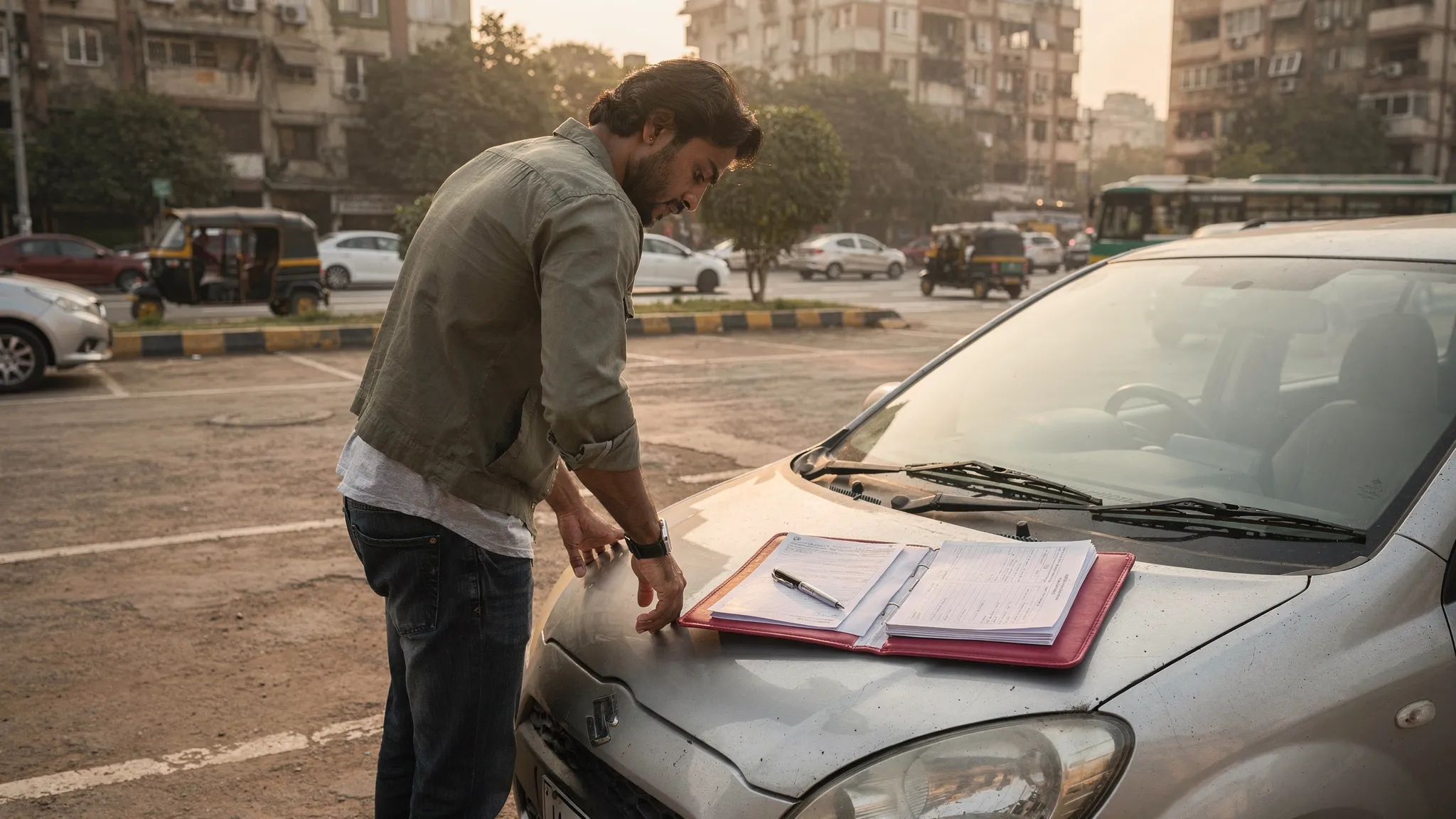
The real meaning of not overpaying in Delhi NCR
A fair car deal is not always the cheapest listing. In Delhi NCR, a fair deal is one where the price matches the car's age, fuel type, registration validity, service history, condition, ownership costs, and paperwork risk.
This matters because Delhi and Gurugram buyers deal with some very local issues. Traffic-heavy use can wear out clutch, brakes, suspension, tyres, and AC systems faster. Waterlogging in some areas can hide electrical or underbody damage. Registration rules also make an older diesel or petrol car less valuable than it may appear on paper.
So before you fall for a low price, ask one question: what will this car cost me over the next 12 months?
Start with a total budget, not a listing price
Many buyers decide their budget as ₹5 lakh, ₹8 lakh, or ₹12 lakh and then search for cars at that exact price. That is how overpaying begins. The car's asking price is only one part of your real cost.
Use this simple budget table before shortlisting any car:
| Cost head | Why it can increase your final spend | How to avoid overpaying |
|---|---|---|
| Purchase price | The seller's quote may be higher than local market value | Compare similar Delhi and Gurugram listings before visiting |
| RC transfer and RTO work | Interstate or address-related transfers can add time and cost | Confirm transfer process before paying a token |
| Insurance | An expired or weak policy shifts cost to you immediately | Ask for current policy details and compare renewal cost |
| Immediate service | Fluids, filters, alignment, AC service, or battery work may be due | Keep a maintenance buffer instead of spending your full budget |
| Tyres and brakes | NCR traffic can wear them faster than highway-driven cars | Check tyre age, tread depth, brake noise, and pedal feel |
| Finance charges | A lower price with a high interest loan can cost more overall | Compare total payable amount, not only EMI |
| Accessories and add-ons | Dealers may bundle items you do not need | Ask for an itemised quote and remove optional extras |
| Pending challans or dues | Unpaid fines can delay transfer or become a dispute | Verify challans before final payment |
As a rule of thumb, do not spend your full budget on the car itself. Keep a separate buffer for insurance, transfer, and immediate maintenance. This one habit can save Delhi NCR buyers from financial stress after delivery.
Compare only like-for-like cars
A common mistake is comparing two cars only by model name. For example, two Honda City or Hyundai i20 listings may look similar, but their value can differ widely based on variant, fuel type, transmission, ownership, registration year, and service history.
When you compare prices, keep these factors the same as far as possible:
- Model, variant, and transmission type
- Manufacturing year and registration year
- Fuel type, especially petrol, diesel, CNG, hybrid, or EV
- Odometer reading and service record quality
- Number of owners
- Registration state, such as DL or HR
- Insurance validity and claim history, if available
- Tyre, battery, clutch, suspension, and AC condition
Look at at least three to five comparable cars before deciding whether a price is fair. If you are using an online marketplace like Hooter, compare verified dealer listings across different budgets and body types before scheduling visits.
Delhi NCR price traps that make buyers overpay
A cheap diesel may not be cheap
Delhi NCR has strict rules around older vehicles, especially diesel cars. As a general rule, diesel vehicles older than 10 years and petrol vehicles older than 15 years face usage restrictions in the region. Always verify the current status and remaining legal usability before buying an older car.
This is where many buyers overpay. A nine-year-old diesel SUV may look like a bargain, but if it has very limited usable life left in Delhi NCR, its resale value and practical value may be much lower than the asking price suggests.
DL vs HR registration can affect the deal
A Gurugram registered car may be perfect for a Gurgaon buyer, while a Delhi buyer may need to factor in transfer requirements and address-related RTO work. Similarly, a Delhi registered car being sold in Gurugram needs clean paperwork and a clear transfer plan.
Do not rely on verbal promises. The seller should be able to explain who will handle transfer, what documents are required, and when the RC transfer will be completed.
Pending challans can spoil a good deal
Before paying any meaningful amount, check vehicle details and challan status through official portals such as VAHAN and eChallan. Pending challans, mismatched details, or hypothecation issues can delay ownership transfer.
A seller who avoids document checks, refuses to share the registration number, or pushes for urgent payment should be treated as a red flag.
Free accessories are not always free
Some dealers or sellers may highlight accessories, polish, seat covers, infotainment upgrades, ceramic coating, or extended services to justify a higher price. These items may be useful, but they should not distract you from the car's core value.
If the base car is overpriced, no accessory package makes it a good deal. Ask for the car price separately and the optional add-ons separately.
Inspect for value loss, not just good condition
When buyers inspect a car, they often focus on whether it looks clean. A shiny exterior does not always mean the car is mechanically sound. In Delhi and Gurugram, you should inspect the parts that directly affect price and future repair cost.
| What to check | Why it affects price | Smart buyer response |
|---|---|---|
| Uneven paint or panel gaps | May indicate repainting or accident repair | Ask for repair history and negotiate only after inspection |
| Tyre age and tread | Four new tyres can add a major immediate cost | Reduce offer if replacement is due soon |
| Clutch feel in traffic | Manual cars in NCR traffic can have worn clutches | Test in slow traffic, not only on an open road |
| Suspension noise | Potholes and rough patches can damage components | Use repair estimate as a negotiation point |
| AC cooling | Delhi summers make AC performance critical | Test at idle and during the drive |
| Service history | Missing records increase risk | Pay less for uncertain maintenance history |
| Battery health | Weak batteries are common in city-driven cars | Check age and starting behaviour |
| Interior wear | Heavy use may not match low odometer claims | Compare wear with mileage and ownership pattern |
If you are not confident, take a trusted mechanic or request an independent inspection. Spending a small amount before purchase is better than discovering a major repair after payment.
Set your target price before you meet the seller
Negotiation works best when you know your number before the seller starts persuading you. Your target price should be based on market comparisons and expected costs, not on emotion.
A simple formula is:
Fair offer = comparable local market price minus immediate repair cost minus paperwork risk minus age or resale penalty
For example, suppose similar Delhi and Gurugram listings for the same car are around ₹5.60 lakh. The seller is asking ₹5.85 lakh. During inspection, you find that insurance renewal is due, two tyres need replacement soon, and there is minor suspension noise. In that case, you can justify a lower offer instead of simply saying the price is too high.
This approach changes the conversation. You are not bargaining randomly, you are showing the seller why your offer makes sense.
Negotiate without sounding like a lowballer
Good negotiation is polite, specific, and backed by evidence. Delhi NCR sellers and dealers hear unrealistic offers every day, so a data-backed buyer usually gets taken more seriously.
Use these negotiation moves:
- Ask for an itemised final quote before discussing payment
- Keep the car price separate from insurance, transfer, accessories, and warranty items
- Show comparable listings from Delhi and Gurugram for the same variant and year
- Use inspection findings, not personal opinion, to justify your offer
- Avoid revealing your maximum budget too early
- Be ready to walk away if the seller creates urgency or refuses verification
The best line is often simple: this is the number I can justify after checking market price, insurance, transfer, and immediate work. If that works for you, I am ready to proceed after document verification.
Check finance and insurance before calling it a deal
Many buyers focus on the sale price but lose money through finance or insurance. A car that is ₹20,000 cheaper can still cost more if the loan has a higher interest rate, processing fee, foreclosure charge, or longer tenure.
Before finalising finance, compare the total payable amount. Ask for interest rate, processing fee, loan tenure, EMI, foreclosure terms, and hypothecation process. If you plan to close the loan early, foreclosure rules matter.
Insurance also affects your real cost. Compare IDV, coverage type, claim process, and add-ons. For newer used cars, add-ons like zero depreciation may be useful. For Delhi NCR, where monsoon waterlogging can be a concern, understand what is covered and what is excluded before paying.
Hooter also offers insurance services, so buyers can evaluate insurance needs along with the car purchase process instead of treating it as an afterthought.
Choose the right time to buy, but do not chase timing blindly
Timing can help, especially in Delhi and Gurugram dealer markets. Month-end, quarter-end, and year-end periods may bring more flexibility if dealers want to clear inventory. Prices may also soften when a facelift, new generation, or competing model enters the market.
However, clean used cars with verified documents and realistic pricing do not stay available forever. If the car matches your needs, has clean paperwork, passes inspection, and is fairly priced, do not delay just to save a small amount. The goal is not the cheapest car, it is the best value car.
For more local buying context, you can also read Hooter's guides on where to buy second hand cars in Delhi safely and the best areas to buy used cars in Gurugram.
Final checks before paying a token
A token should only be paid after basic verification. Keep it small, get a written receipt, and clearly mention whether it is refundable if documents or inspection fail.
Before paying, confirm these points:
- RC details match the car, seller, chassis number, and engine number
- Insurance, PUC, and service records are available
- Pending challans have been checked
- Loan hypothecation is cleared or NOC is available
- Final price includes or excludes transfer, insurance, and accessories
- Delivery date and RC transfer timeline are written down
- Payment will be made through traceable banking channels
- Original documents will be handed over as agreed
If you are buying online, follow the same discipline. Hooter's guide on how to buy a car online safely explains how to handle verification, inspection, and payment with more confidence.
How Hooter helps Delhi NCR buyers avoid overpaying
Hooter is built for buyers who want transparent car deals without running from one dealer to another across Delhi and Gurugram. You can discover and compare verified used car listings across brands, body types, and budgets, then use expert insights to make a more informed decision.
The biggest advantage is comparison. When you see multiple verified dealer listings in one place, it becomes easier to understand whether a seller's quote is fair, inflated, or worth negotiating. Hooter also supports transparent transactions and insurance services, which helps you look beyond the sticker price and evaluate the complete cost of ownership.
Frequently Asked Questions
What is the best way to buy a car in Delhi NCR without overpaying? Compare similar Delhi and Gurugram listings, calculate total ownership cost, inspect the car properly, verify documents, and negotiate using market data instead of emotion.
Should I buy a Delhi registered car or a Gurugram registered car? Either can work if the paperwork is clean and transfer is possible for your address. Check RC details, hypothecation, challans, insurance, and transfer process before paying.
Are diesel cars worth buying in Delhi NCR? They can be worth considering only if they have enough legal usable life left and the price reflects local restrictions. Older diesel cars may look cheap but can be difficult to use or resell in Delhi NCR.
How much token should I pay for a used car? Keep the token amount small and pay only after basic verification. Always take a written receipt mentioning car details, final price, refund conditions, and expected transfer timeline.
Can Hooter help me compare car prices in Delhi NCR? Yes. Hooter lets buyers browse and compare verified used car listings across brands, body types, and budgets, making it easier to judge whether a deal is fairly priced.
Find a fair car deal in Delhi NCR with Hooter
If you want to buy a car in Delhi NCR without overpaying, start with verified listings, transparent pricing, and proper comparison. Explore used cars on Hooter, compare options across Delhi and Gurugram, and make your next car purchase with more confidence.