
Finding a usable car under ₹1 lakh is not impossible in India, but it needs the right expectations. At this budget, you are not shopping for the newest features or showroom-like condition. You are looking for a simple, reliable, easy-to-repair car that can handle office commutes, school drops, grocery runs, and short city trips without draining your wallet.
If you are searching for used cars within 1 lakh, the best choices are usually older petrol hatchbacks from brands with affordable spares and wide service support. The real trick is not just finding a low price. It is finding a car with clean documents, a healthy engine, working AC, manageable repair costs, and enough remaining registration life for your city.
This guide explains what you can realistically buy, which models make sense for city driving, what to avoid, and how to inspect a sub-₹1 lakh used car before paying.
What ₹1 lakh realistically buys in 2026
A ₹1 lakh budget sits at the entry point of the used-car market. Most cars in this range will be older, have higher odometer readings, and may need immediate maintenance. That does not make them bad purchases. It simply means condition matters more than badge, features, or variant.
In most Indian cities, this budget typically gets you an older manual petrol hatchback, sometimes a factory or properly endorsed CNG car, and occasionally an older compact sedan. Automatic cars under ₹1 lakh are rare, and if available, they must be checked carefully because automatic gearbox repairs can cost more than the car itself.
You should also think beyond the purchase price. A car listed at ₹90,000 may still need tyres, battery, insurance renewal, service, AC repair, or suspension work. A car listed at ₹1.10 lakh but already maintained properly may be cheaper to own over the next year.
| Cost item | What to budget for | Why it matters |
|---|---|---|
| Purchase price | ₹70,000 to ₹1,00,000 | Keep some money aside instead of spending the full budget upfront |
| Immediate service | ₹5,000 to ₹15,000 | Engine oil, filters, fluids, belts, brakes, and basic checks |
| Tyres or battery | ₹4,000 to ₹20,000 | Old tyres and weak batteries are common in budget used cars |
| Insurance and PUC | Varies by car and city | Required for legal road use and peace of mind |
| RC transfer and paperwork | Varies by RTO | Essential to avoid ownership disputes later |
| Unexpected repairs | ₹10,000 or more | Older cars can reveal issues after regular use |
The smartest approach is to keep your all-in budget around ₹1.20 lakh if possible. Use ₹1 lakh for the car and keep the rest for making it road-ready.
Best used car types within ₹1 lakh for city driving
For city use, choose simplicity. A small petrol hatchback with a light clutch, good visibility, easy parking, and affordable spares will usually serve you better than an older diesel sedan or feature-loaded car with expensive problems.
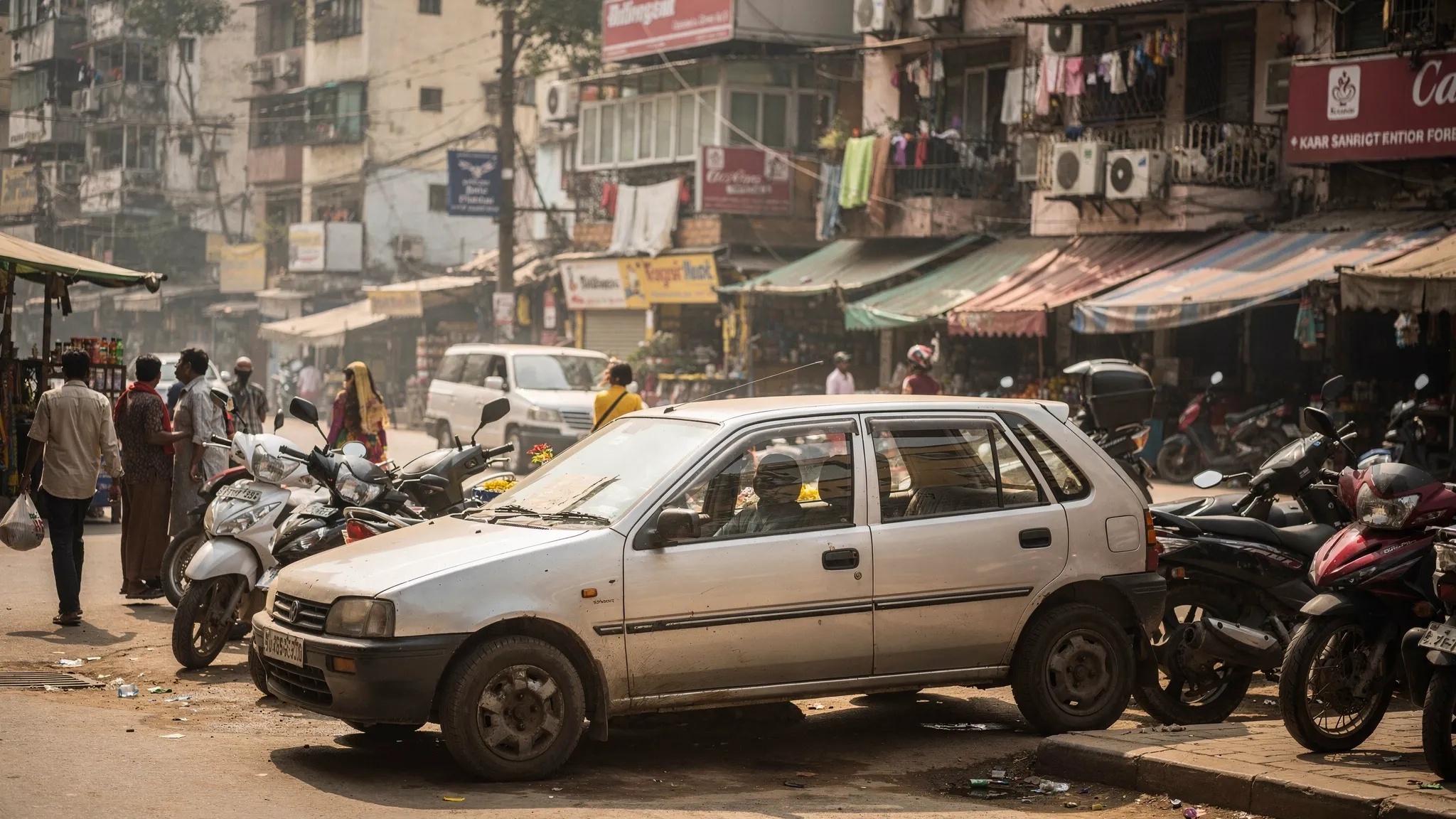
Here are the most sensible categories to consider.
| Used car option | Why it works in the city | What to check carefully |
|---|---|---|
| Maruti Suzuki Alto or older Maruti 800 | Low running cost, easy parking, affordable spares, simple mechanics | Rust, overheating, suspension noise, remaining registration life |
| Maruti Suzuki WagonR | Tall seating, good visibility, practical cabin, easy to drive | Clutch wear, AC cooling, steering play, CNG fitment if applicable |
| Hyundai Santro Xing | Comfortable for city speeds, reliable petrol engine, decent cabin space | Fuel efficiency, engine mounts, electricals, power steering condition |
| Maruti Suzuki Zen Estilo or A-Star | Compact footprint, petrol reliability, easy urban handling | Parts availability in your city, body condition, clutch and gearbox |
| Chevrolet Spark or Beat petrol | Often available at attractive prices, compact and comfortable | Service support, spare parts access, engine and AC condition |
| Tata Indica petrol or older hatchbacks | Spacious and affordable to buy | Avoid poorly maintained examples, check suspension, engine smoke, and rust |
This table is only a starting point. In the sub-₹1 lakh category, a well-maintained Santro can be a better buy than a neglected Alto, and a clean WagonR can be worth stretching slightly for. Always buy the condition, not just the model name.
Petrol, diesel, or CNG: what should you choose?
For city driving under ₹1 lakh, petrol is usually the safest choice. Petrol engines are quieter, easier to maintain, and less risky in age-restricted zones. Older diesel cars may look tempting because they are cheap, but they can bring higher repair costs, stricter registration rules, and more pollution-related compliance concerns.
In Delhi-NCR, for example, petrol vehicles older than 15 years and diesel vehicles older than 10 years face restrictions. Rules can change, and enforcement can vary by region, so always check local RTO guidelines before buying an older car.
CNG can be economical if your daily running is high, but only if the kit is legal, endorsed on the RC, and installed properly. Avoid unapproved CNG conversions. A cheap CNG car with poor installation can cause performance issues, safety risks, and insurance problems.
For most buyers, the ranking is simple: maintained petrol first, properly documented CNG second, old diesel only if you fully understand the legal and repair risks in your city.
What makes a good city car under ₹1 lakh?
City driving is different from highway use. Your car will spend more time in traffic than at high speeds. That means you should prioritise comfort, cooling, manoeuvrability, and low-speed mechanical health.
A good city car in this budget should have a smooth idle, light clutch, predictable brakes, working AC, and no overheating in traffic. The steering should not feel unusually heavy or loose. The gearbox should slot cleanly without grinding. The car should start easily when cold and when hot.
Do not overvalue music systems, alloy wheels, seat covers, or flashy accessories. At this budget, a clean engine bay and valid paperwork matter more than cosmetic upgrades. Even small issues like weak AC or worn clutch can become expensive after purchase.
Red flags to avoid when buying used cars within ₹1 lakh
A low price can hide costly problems. Walk away if the seller pressures you to pay quickly or avoids document checks. A genuine seller should be comfortable with inspection, test drive, and ownership verification.
Avoid cars with these warning signs:
- RC owner name does not match the seller and no proper authority letter is available.
- Insurance, PUC, or registration has expired and the seller cannot explain why.
- The car has visible flood marks, damp carpets, musty smell, or electrical glitches.
- Engine emits blue smoke, overheats, or makes knocking sounds.
- Chassis, pillars, or engine bay show signs of major accident repair.
- CNG kit is installed but not endorsed on the RC.
- Seller refuses an independent mechanic inspection.
A car that fails one minor check may still be negotiable. A car that fails document verification should not be purchased, no matter how attractive the price looks.
Document checklist before payment
Paperwork is especially important for low-budget used cars because many older vehicles have changed hands multiple times. Never treat document checks as a formality.
Before paying, verify the RC details, chassis number, engine number, insurance status, PUC validity, and hypothecation status. If the car was financed earlier, make sure the loan has been closed and hypothecation is removed from the RC. If the vehicle is from another state, understand the NOC and re-registration process before finalising the deal.
You should also check whether there are pending challans. In many cities, unpaid fines can create problems during ownership transfer. Use official government portals or RTO verification channels wherever available.
At minimum, collect signed transfer forms, seller ID proof, address proof, original RC or smart card, valid insurance copy, PUC certificate, and sale receipt. Keep digital copies of everything.
Mechanical inspection: where to spend your attention
A short visual look is not enough. Start the car when the engine is cold, not after the seller has already warmed it up. A cold start reveals weak batteries, poor tuning, smoke, and engine noise more clearly.
During the test drive, check clutch bite point, steering response, braking, suspension sounds, gear shifts, and AC cooling. Drive in slow traffic if possible because city problems often appear at low speed. Let the car idle for a few minutes with AC on and watch the temperature gauge. Overheating in traffic is a serious issue.
A trusted mechanic can identify hidden problems like oil leaks, weak compression, worn suspension bushes, damaged engine mounts, poor repainting, and accident repairs. The inspection fee is small compared to the cost of buying the wrong car.
City-wise buying tips for ultra-budget used cars
Your city affects what type of used car makes sense. A car that is a bargain in one location may be a bad idea in another because of age rules, traffic conditions, road quality, or climate.
In Delhi-NCR, avoid old diesel cars unless you are fully clear about age restrictions and transfer rules. In Mumbai, Chennai, Kochi, and other coastal or flood-prone areas, inspect carefully for rust, water damage, and electrical issues. In Bengaluru, Pune, Hyderabad, and Gurugram, heavy stop-go traffic makes clutch, cooling system, and AC condition very important. In cities with narrow lanes and limited parking, compact hatchbacks like Alto, Santro, and WagonR usually make more sense than older sedans.
If your daily driving is less than 20 km, reliability and low repair cost matter more than maximum mileage. If you drive 40 km or more every day, fuel cost becomes more important, but do not buy a risky CNG or diesel car just to save on fuel.
How to negotiate without making a bad compromise
Negotiation should be based on facts, not just the desire to reduce price. Inspect the car first, list the repairs needed, estimate the cost, and then negotiate. For example, if tyres are worn, AC is weak, and insurance has expired, those are valid reasons to ask for a lower price.
Compare similar cars in your city before making an offer. Hooter can help you discover and compare used cars across brands and budgets, so you get a clearer idea of market pricing before contacting sellers or dealers.
Do not bargain so aggressively that you end up choosing the cheapest but worst car. Under ₹1 lakh, paying ₹10,000 more for cleaner documents and better maintenance is often the smarter financial decision.
Budget discipline also helps outside car buying. The same habit applies to any high-value online purchase: check authenticity, compare the final cost, and avoid impulse upgrades, whether you are buying a used car or browsing exclusive sneakers from verified sellers.
Should you buy from a dealer or private seller?
Both options can work, but each has trade-offs. A private seller may offer a lower price, especially if they want to sell quickly. However, you must handle inspection, negotiation, and paperwork carefully.
A dealer may provide more options in one place and can assist with documentation, but prices may be slightly higher. The advantage is convenience, especially for first-time buyers. If you buy through an online marketplace with verified dealer listings, you can compare options more easily and reduce the risk of wasting time on unclear listings.
No matter where you buy, the rule is the same: verify the car, verify the seller, verify the documents, and never skip a test drive.
Is a ₹1 lakh used car worth it?
A used car within ₹1 lakh can be worth it if your expectations are practical. It is suitable for learners, short city commutes, small families, senior citizens who need local mobility, or anyone upgrading from a two-wheeler for weather protection and convenience.
It may not be ideal if you need daily long-distance travel, frequent highway trips, advanced safety features, automatic transmission, or low-maintenance ownership without surprises. In that case, increasing the budget to ₹2 lakh or ₹3 lakh may open up better, newer, and safer options.
The best sub-₹1 lakh car is not the newest-looking one. It is the one that starts every morning, stays cool in traffic, has legal documents, and does not demand expensive repairs immediately after purchase.
Frequently Asked Questions
Can I get reliable used cars within ₹1 lakh in India? Yes, but you need to focus on older, well-maintained petrol hatchbacks and inspect them carefully. Reliability depends more on condition, service history, and documents than on the model alone.
Which used car is best under ₹1 lakh for city driving? Popular choices include Maruti Alto, older WagonR, Hyundai Santro Xing, Maruti Zen Estilo, and similar compact petrol hatchbacks. The best option is the cleanest car with valid paperwork and affordable repairs in your city.
Should I buy a diesel car under ₹1 lakh? Usually, it is better to avoid old diesel cars for city use unless you understand local age restrictions, repair costs, and emission rules. Petrol cars are generally safer choices in this budget.
Is CNG a good option under ₹1 lakh? CNG can be economical, but only if the kit is properly installed, legal, and endorsed on the RC. Avoid cars with unapproved or poorly maintained CNG kits.
How much extra money should I keep after buying a ₹1 lakh used car? Try to keep at least ₹15,000 to ₹30,000 aside for service, small repairs, insurance, paperwork, tyres, or battery replacement.
What documents should I check before buying? Check RC, insurance, PUC, seller ID, hypothecation status, pending challans, chassis number, engine number, and transfer forms. Do not buy if ownership transfer is unclear.
Find your next city car with Hooter
Buying a budget used car is easier when you can compare options transparently. On Hooter, you can explore verified used-car listings, compare prices, browse by budget or body type, and get expert guidance before making a decision.
Whether you want to buy your first city car, upgrade from a two-wheeler, or sell your current vehicle, Hooter helps you move with more confidence and less guesswork.