
Buying a used car can be a smart financial move, but it also comes with one big risk: choosing the wrong dealer. In India, most “bad experiences” (tampered odometers, hidden accident damage, unclear ownership, delayed RC transfer, surprise fees) trace back to unreliable second hand car dealers and weak paperwork.
This guide helps you evaluate dealers like a pro, so you can shortlist the right seller before you even start negotiating.
What “reliable” really means for second hand car dealers
A reliable dealer is not just polite or popular. They consistently do four things:
- Prove car ownership and history with verifiable documents.
- Price transparently, with fees and add-ons clearly explained.
- Allow independent inspection and a proper test drive without pressure.
- Complete the transfer process correctly, including RC-related paperwork.
If even one of these pillars is missing, your “good deal” can become expensive later.
Step 1: Confirm the dealer is legitimate (not just “active on Instagram”)
Start with basic credibility checks. Reliable dealers usually have stable operations and clear accountability.
Look for signals like:
- A physical location (yard/showroom) with a consistent address, signage, and working contact details.
- A proper invoice and receipt process (ask how they bill and what paperwork you will receive).
- A willingness to share business details such as GST information (where applicable) and a written sale agreement.
If the dealer avoids documentation, pushes you to “just pay a token first”, or insists everything will be handled later, treat that as a serious warning.
Step 2: Ask where the cars come from (sourcing matters more than most buyers think)
Two identical models can have very different risk profiles depending on sourcing. Before you fall in love with the car, ask:
- Is it single-owner or multi-owner?
- Was it company-leased, taxi-registered, or personal use?
- Do they have service records or any maintenance history?
- Why is the owner selling (if they know)?
A reliable dealer will answer calmly and consistently. A shady one often changes the story as you ask follow-up questions.
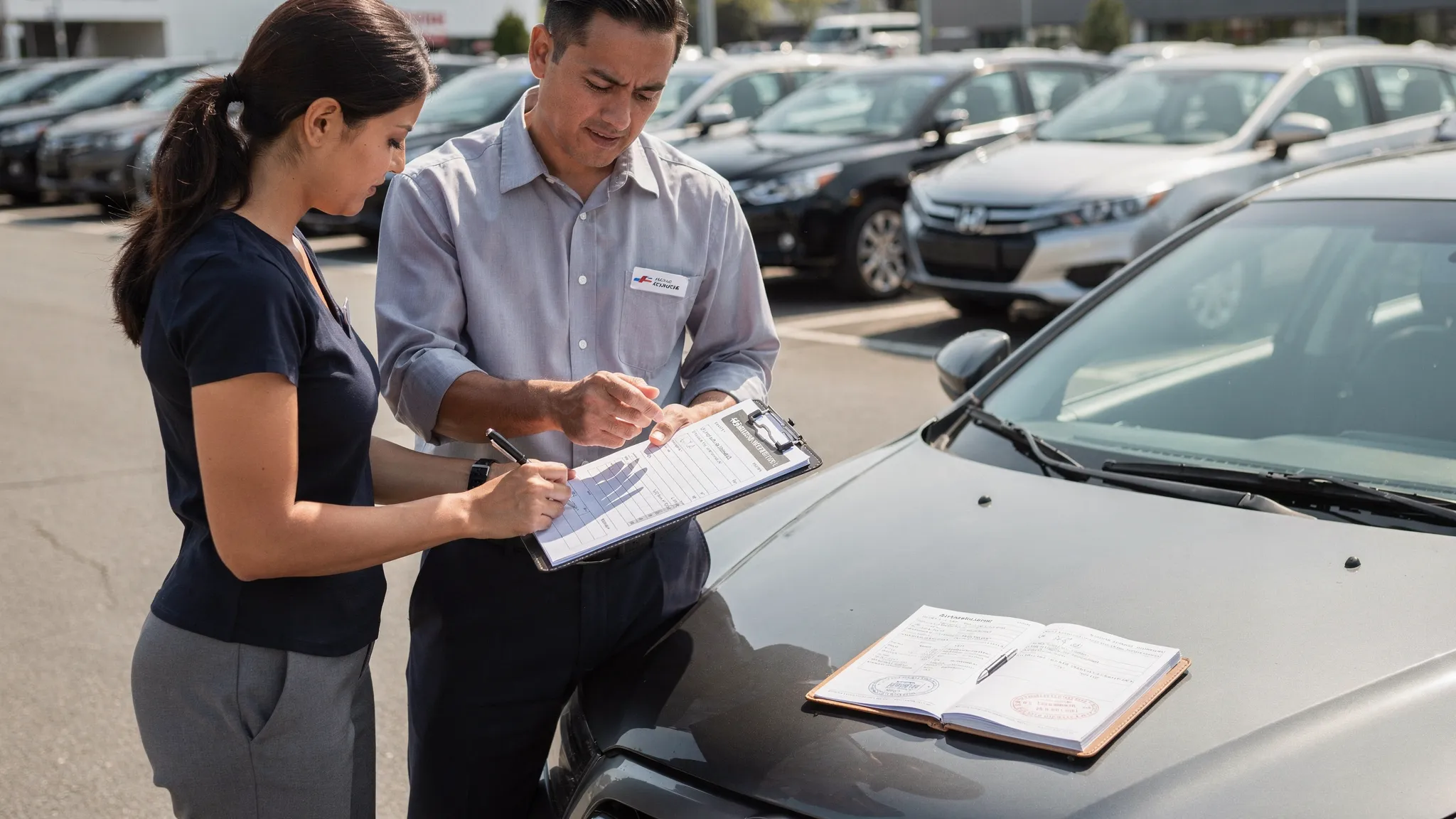
Step 3: Verify documents early (before you spend time on inspection)
In used cars, paperwork is protection. Ask for clear photos of documents before visiting, then match originals on-site.
Must-check documents in India
- RC (Registration Certificate): Confirm owner name, vehicle class, fuel type, registration date, chassis/engine number.
- Insurance: Check validity, type (third party/comprehensive), claim history if shared.
- PUC: Still important for compliance and a basic health signal.
- Loan status (hypothecation): If the RC has HP (loan), ask how it will be closed and what proof you will get.
- Pending challans: Ask the dealer to confirm whether any are pending.
You can cross-check RC basics through the Government’s VAHAN services on the official Parivahan portal.
If you want a quick refresher on PUC importance and validity, you can also read Hooter’s guide on what PUC is and how to get it.
Paperwork checklist (quick view)
| Item to verify | What you’re trying to prevent | What “good” looks like |
|---|---|---|
| RC details match the car | Stolen car, mismatch, tampering | Chassis/engine numbers match physically |
| Insurance validity | Surprise out-of-pocket risk | Active policy, clear coverage type |
| Hypothecation status | Transfer delays, legal/loan issues | HP removed, or clear closure plan in writing |
| PUC validity | Fines, compliance hassle | Valid certificate available |
| Seller identity (dealer/owner) | Fraud, payment disputes | Clear invoice and signed sale docs |
Step 4: Evaluate transparency during inspection and test drive
A reliable dealer does not rush you through the most important part.
They should allow:
- A cold start (engine check before it’s warmed up)
- A proper test drive on mixed roads
- Time to check tyres, suspension noise, panel gaps, underbody signs, AC performance
- An independent mechanic inspection (or at least not discourage it)
If you want a structured approach, use Hooter’s used car buying checklist and combine it with these test drive tips to cover both condition and driving feel.
Step 5: Compare pricing like a negotiator (not like a first-time buyer)
Many buyers focus only on the sticker price. Reliable dealers are comfortable explaining the full price structure.
Ask for a written breakup of:
- Car price
- Transfer/processing fees (if any)
- Insurance (new policy vs transfer)
- Any add-ons (accessories, warranty package)
A simple “price clarity” scorecard
| Pricing behavior | What it means | What you should do |
|---|---|---|
| Clear written breakup shared | Transparent process | Proceed to inspection/negotiation |
| Vague “all inclusive” without details | Hidden charges risk | Ask for itemized quote |
| Pressure to buy add-ons | Margin-driven selling | Decline, compare alternatives |
| Price keeps changing frequently | Unstable deal, possible baiting | Walk away if it continues |
Also, always compare similar listings (same variant, year, kms, city). On a marketplace like Hooter, you can compare across brands and budgets and avoid anchoring your decision to just one dealer’s quote.
Step 6: Check dealer reputation the right way (not just star ratings)
Online reviews help, but only if you read them intelligently.
Look for patterns such as:
- Multiple complaints about RC transfer delays
- Buyers mentioning fees added at the last minute
- Repeated issues about refunds not processed
- Consistent praise for documentation and transparency
Where to check:
- Google Business Profile reviews
- Local auto forums and city groups
- Word-of-mouth references (ask the dealer for 1 to 2 recent buyer references, and see how they respond)
A single bad review is not always meaningful. A repeated pattern is.
Step 7: Understand warranty, return promises, and “guarantees” in writing
Some second hand car dealers offer limited warranty packages or third-party warranties. Others say “engine guaranteed” verbally.
Your rule: If it’s not written, it doesn’t exist.
Before paying, ask for a written note covering:
- Warranty duration (if any)
- What parts are covered and excluded
- Claim process and who pays labour
- Return policy terms (if offered)
If the dealer refuses written terms but keeps using “trust me” language, choose a different seller.
Step 8: Pay safely and keep proof (this prevents most post-sale disputes)
For payments, prioritise traceability.
Good practices include:
- Pay via bank transfer/UPI to the dealer’s official account (where possible)
- Take a signed receipt/invoice for every payment, including token amount
- Avoid sharing OTPs or paying into unknown personal accounts under pressure
If the dealer’s payment process feels improvised, your after-sale support will likely be the same.
Step 9: Ensure RC transfer and delivery process is clearly explained
A reliable dealer should explain the ownership transfer process clearly, including what documents you will sign and what you will receive.
At a minimum, ensure you have:
- A signed sale agreement/invoice
- Delivery note with date and vehicle details
- Copies of forms required for transfer (commonly Form 29 and Form 30, depending on the transaction)
For official transport and vehicle-related services and references, start from the Parivahan portal.
Red flags: when to walk away immediately
Some signals are not “negotiation points”. They are exit signs.
- Dealer won’t show original RC or provides unclear copies only
- Chassis/engine number does not match the RC
- Strong push to pay a token before you see documents
- Refuses an independent inspection or rushes the test drive
- “Today only” pressure tactics for a common car/model
- Unexplained repainting, flood indicators, or inconsistent accident history answers
- No written breakup, only verbal pricing
Walking away is also a skill in used-car buying.
How Hooter can help you shortlist reliable dealers faster
If your goal is to reduce risk and save time, a marketplace approach is often easier than visiting random yards.
On Hooter, you can browse a comprehensive used-car marketplace with verified dealer listings, compare prices across options, and use expert guidance to make more confident choices. If you want to plan ownership properly, Hooter also offers insurance services so you can evaluate the complete cost of buying, not just the car price.
Frequently Asked Questions
How do I know if second hand car dealers are trustworthy? Start with documentation and transparency: original RC verification, clear price breakup, willingness for inspection, and a written sale process. Avoid dealers who rush payments or avoid paperwork.
What documents should I check before buying a used car from a dealer? Check the RC, insurance, PUC, hypothecation (loan) status, and any pending challans. Cross-check RC basics using the Parivahan (VAHAN) portal.
Is it safer to buy a used car from a dealer or directly from an owner? Either can be safe if paperwork and condition checks are strong. Dealers may offer more choice and process support, but you must confirm transparency, fees, and transfer handling.
Should I get a mechanic inspection even if the dealer says the car is “fully checked”? Yes. An independent inspection reduces risk and helps you estimate upcoming costs. A reliable dealer won’t discourage it.
What are common hidden charges from used car dealers? Common surprises include inflated handling/processing fees, forced accessories, overpriced insurance, and vague “transfer charges”. Always ask for an itemized written quote.
Browse verified options before you commit
If you are comparing multiple cars and want to avoid risky sellers, explore Hooter to discover and compare verified used-car listings across budgets and body types, then shortlist the dealers that meet the checks in this guide.